The Man Who Came Back to Say Thank You
by Ali D.
The eye camp at Mnazi Mmoja was busy that morning. KSIJ Dar es Salaam had opened its doors for Mafunzo ya Imam Hussain, and the grounds were full: people waiting for eye checks, children tugging at their parents' hands, volunteers moving between tents with forms and bottles of water. I was there to help wherever I was needed, mostly at the eye camp, guiding people from one queue to the next.
Somewhere in the middle of all that movement, a man stepped out of the line and asked if he could speak with me.
He was quiet, almost apologetic. He said his family was struggling. His children were unwell, in their minds, and he did not know what to do anymore. Then he said something I have not been able to forget. One of his sons, he told me, had to be kept chained.
I took his number. I told him someone would call. He nodded and disappeared back into the crowd.
That same day, one of our team from Golden Foundation, a man the children in our programmes simply call "uncle," made that call. Then he went to see the family himself.
He found a small home and a mother standing at its centre, holding everything together. She fries snacks every morning and sells them at a corner where hardly anyone passes. She greeted him with a warmth that made him feel like a guest, even as he began to understand what she was living with.
Her youngest son was in a small room with no window. He had been restrained there for a long time. He ate there, slept there, lived there. Once a week he was released briefly so he could be washed. He had grown painfully thin, and the long confinement was beginning to show on his body.
When the father arrived and helped bathe his son, there was tenderness in it, and exhaustion too. This was a family that had run out of options long ago.
Then there was the elder son. He has been fighting his own battle with substance use, yet every day he goes out to earn whatever he can for the household. Our uncle, seeing him, offered him a little money for a soda or an energy drink.
The young man shook his head. "Those are bad for you," he said. And then, more quietly: "I am hungry."
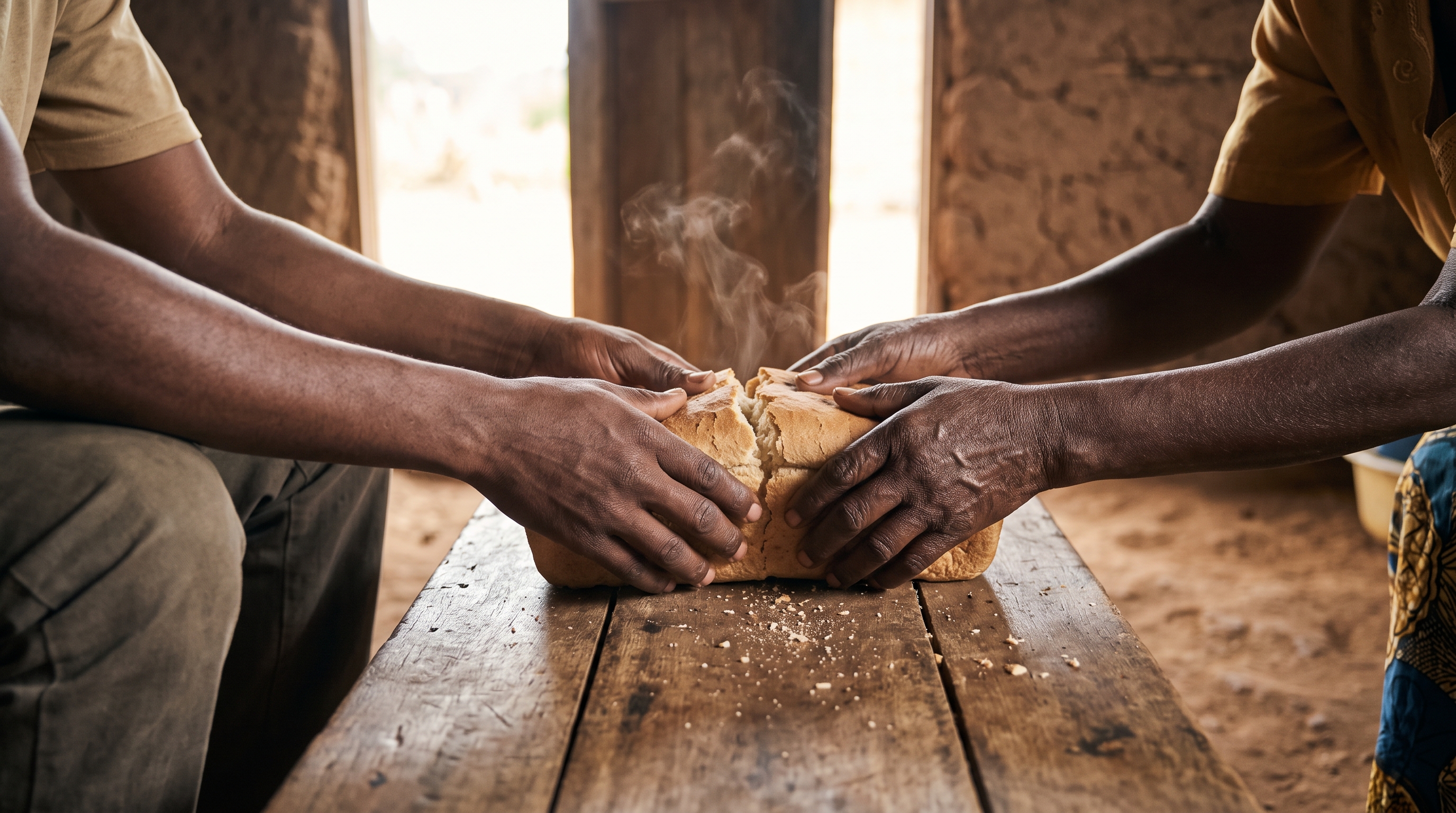
So he was given money for bread instead. He walked to the shop, came back, and before he ate a single bite, he broke the loaf and shared it with his family.
Sometimes one small moment tells you everything about a person. That was his.
It would be easy to hear a story like this and look for someone to blame. I would ask you to pause before doing that.
Here in Tanzania, mental illness still lives behind closed doors. Families carry it in silence, afraid of what neighbours will say, unsure where to go, and often convinced that nothing can be done. Treatment feels far away and expensive. When a loved one becomes unwell and help seems out of reach, people make choices born of fear and exhaustion. This family had love in abundance. What they had never been given was a door to knock on.
Golden Foundation is now working alongside the family on three things. The first is getting the youngest son to hospital, restoring his strength, and arranging a proper psychiatric evaluation so he can receive real treatment. The second is finding a rehabilitation or sober living placement for his elder brother, so the young man who shared his bread can rebuild his own life. The third is helping their mother grow her small food business, so the household can stand on steadier ground.
Every step is being taken with the family's consent, and with their dignity at the heart of it.
Yet the part of this story that moved me most happened before any of that help arrived.
The next day after that first phone call, the father came back to Mnazi Mmoja. He found me and thanked me. Nothing had been delivered yet. No hospital visit, no food parcel. He came back simply because someone had remembered him and picked up the phone.
I think about that often. How many families are out there, carrying something heavy, waiting for someone to ask? How many would find the courage to speak if they believed someone would listen?
I was at that camp to help people see more clearly. In the end, it was this family who helped me see.
Sometimes, all it takes is being in the right place at the right moment, and choosing to listen.
If you know a family quietly living with mental illness, encourage them to seek care, and speak about it without shame. That is how the silence begins to break. To support families like this one, please contact Golden Foundation.